


Digital Marketing vs Traditional Marketing: Which One Wins in 2026?
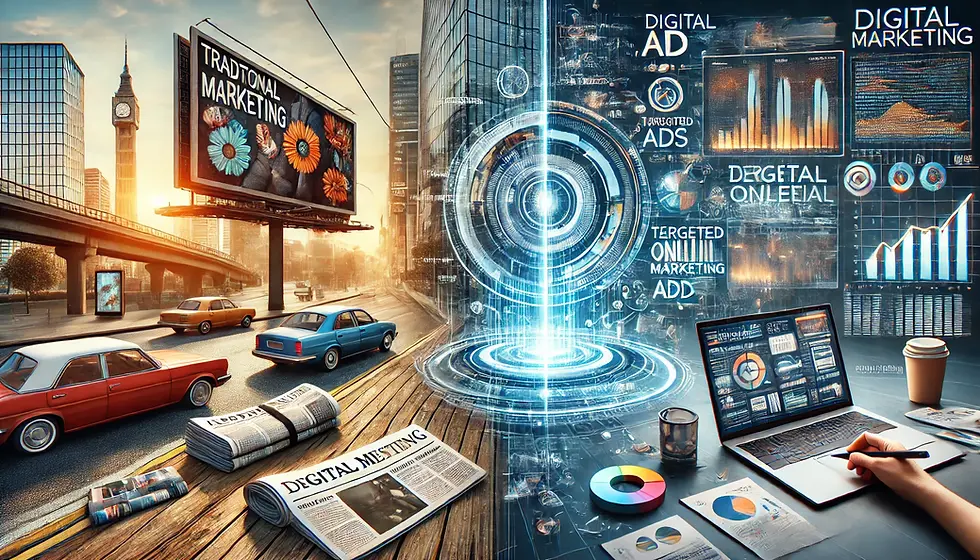
In 2026, marketing is no longer just about being seen—it’s about being relevant, measurable, and personalized. Businesses today face a crucial question: Should they invest in digital marketing or stick with traditional marketing?
While both have their place, the winner in 2026 is becoming increasingly clear.
Let’s break it down.
What Is Traditional Marketing?

Traditional marketing refers to offline promotional methods that have been used for decades. These include:
Television and radio advertisements
Newspaper and magazine ads
Billboards and posters
Flyers and brochures
Direct mail
Telemarketing
Traditional marketing focuses on mass communication, delivering one message to a broad audience.
Strengths of Traditional Marketing
Builds credibility and brand familiarity
Works well for local audiences
Strong reach among older demographics
Effective for large-scale brand awareness
Limitations in 2026
Expensive production and placement costs
Limited audience targeting
Difficult to measure performance accurately
One-way communication (no interaction or feedback)
What Is Digital Marketing?

Digital marketing uses online platforms and digital technologies to reach audiences. Common channels include:
Search Engine Optimization (SEO)
Social Media Marketing
Content Marketing (blogs, videos, podcasts)
Email Marketing
Pay-Per-Click Advertising (Google Ads, Meta Ads)
Influencer Marketing
Data analytics and automation tools
Digital marketing is built around data, personalization, and real-time optimization.
Strengths of Digital Marketing
Highly targeted campaigns
Cost-effective for small and large businesses
Real-time performance tracking
Two-way communication with customers
Scalable and adaptable
Global reach
Challenges
Requires continuous learning and adaptation
Competitive digital spaces
Depends on algorithms and platform updates
Digital Marketing vs Traditional Marketing: Key Differences
Factor | Digital Marketing | Traditional Marketing |
Cost | Budget-friendly & scalable | High upfront costs |
Targeting | Precise audience targeting | Broad, mass targeting |
Measurement | Real-time analytics & metrics | Limited tracking |
Engagement | Interactive & two-way | One-way communication |
Reach | Global | Mostly local |
Flexibility | Easy to modify campaigns | Difficult to change once launched |
Why Digital Marketing Wins in 2026
1. Consumer Behavior Has Changed
In 2026, people:
Search before they buy
Trust online reviews
Spend hours on social media
Prefer personalized content
If your brand isn’t visible online, you don’t exist in your customer’s decision-making process.
2. Data-Driven Decisions Matter
Digital marketing allows businesses to:
Track clicks, conversions, and engagement
Understand customer behavior
Optimize campaigns instantly
Traditional marketing can’t compete with this level of insight.
3. AI & Automation Are Powering Digital Growth
Modern digital marketing uses:
AI-powered ads
Predictive analytics
Chatbots and automation
Smart content personalization
These tools make marketing smarter, faster, and more efficient.
4. Small Businesses Can Compete with Big Brands
In traditional marketing, bigger budgets usually win. In digital marketing, strategy wins.
A well-optimized blog, strong SEO, or viral reel can outperform expensive TV ads.
Does Traditional Marketing Still Have a Role?
Yes—but as a supporting strategy, not the main one.
Traditional marketing still works well for:
Local brand awareness
Events and launches
Trust-building in certain markets
The most effective approach in 2026 is integrated marketing, where traditional methods support a strong digital strategy.
The Verdict: Which One Wins in 2026?
🏆 Digital Marketing Wins—Clearly and Strategically
That doesn’t mean traditional marketing is obsolete, but in 2026:
Digital marketing is essential
Traditional marketing is optional
Data-driven strategies outperform guesswork
Online presence equals brand credibility

Final Thoughts
If you’re a business owner, student, or aspiring marketer, the future belongs to those who understand digital-first strategies.
Learning SEO, social media marketing, content creation, paid ads, and analytics is no longer optional—it’s a career and business necessity.
At Digital Decode, we simplify digital marketing so you can grow with clarity in a fast-changing digital world.


Comments